Critics Gave Practical Magic 2 a 39%. Audiences Gave It 92%. Only One of Those Groups Bought a Ticket.
Practical Magic 2 opened No. 1 with a 53-point gap between its Tomatometer and its audience score, and the internet already has a tidy story about what that means. The tidy story is wrong. The 1998 original had almost the same gap, the widest divide Rotten Tomatoes has ever recorded belongs to a film nobody is calling good, and a 92% from verified ticket-buyers is measuring something other than quality.
Two numbers came out of this weekend, and they are describing the exact same 130 minutes of film.
39%. That's the Tomatometer on Practical Magic 2, off 125 reviews as of Sunday.
92%. That's the Popcornmeter, off 1,000+ verified ratings.
Fifty-three points. Same movie. Same Susanne Bier. Same Sandra Bullock and Nicole Kidman doing the thing you already know they do.
Look, the internet has a very tidy story ready for this, and you already know the shape of it: critics are out of touch, audiences are the real judges, the gatekeepers got humiliated again. It's a great story. It's also mostly wrong, and the actual explanation is more interesting than the fight everybody wants to have.
What the critics actually objected to
Here's the thing about the pull quotes — they're not vague sniffing. They're specific.
Flickering Myth's Robert Kojder opened his review with "Practical Magic 2 is practically garbage," which is the kind of line you write when the pun arrives before the verdict does. But read the sentence after it and he's making a real argument: the original's whole message was about choosing to live your life whether the curse is real or not, and the sequel "blindsidingly retracts" it.
The AV Club's Anna McKibbin went to D-. Her complaint is almost architectural: the film abandons New England for "the cold, unappealing grays of London," and she flags the "antiseptic harshness of the digital cinematography" and a plot that stalls into "a series of convoluted contrivances."
Notice what nobody is saying. Nobody's saying Bullock and Kidman are bad. Nobody's saying the concept is beneath them. The complaint is that a movie whose entire selling point is warmth got shot cold and moved somewhere gray.

That's not a critic failing to understand a crowd-pleaser. That's a critic pointing at the crowd-pleasing and saying it didn't arrive.
The 92% is real. It's also a self-portrait.
Now the other number, and this is where people stop reading and start typing.
That 92% comes from verified ratings — Rotten Tomatoes only counts people it can confirm bought a ticket. Which sounds like it makes the number more trustworthy, and in one sense it does. No brigading, no review-bombing, no accounts made that morning.
But think about what "verified" actually filters for. It filters for people who chose to buy a ticket to a witch sequel twenty-eight years after the first one. Nobody wanders into Practical Magic 2 by accident. The audience score isn't a referendum on the film. It's a satisfaction survey handed to the fan club.
And here's the tell. Go one aggregator over. On Metacritic the Metascore is 44 off 41 critics — bad, but notably less apocalyptic than 39%, because Metacritic weights a mixed review as mixed instead of rounding it to rotten. And the Metacritic user score? 4.9 out of 10, off 14 ratings.
Fourteen ratings is nothing, and I'm not going to pretend it's a counterweight to a thousand verified ones. But it's a useful crack in the story. "Audiences loved it" turns out to depend a great deal on which audience you asked and how hard it was to get to them.
The CinemaScore, for what it's worth, splits the difference honestly: B+, with the 35-49 crowd handing over an A- and the under-35s a B. Opening night was 75% female. PostTrak came in at 4.5 out of 5.
So: the people it was made for liked it a lot. The people adjacent to them liked it fine. That is a completely coherent result and it does not require anyone to be lying.

The 1998 control group nobody checked
This is the part that should end the argument.
The original Practical Magic — the one now spoken about like a beloved classic, the one people have midnight-margarita parties for — sits at 31% with critics and 73% with audiences. One hundred and eleven reviews. A 42-point gap.
It got a B- CinemaScore in October 1998. It opened to $13.1 million. It finished its entire domestic run at $46.7 million.
So the gap isn't new. The gap is inherited. Critics disliked this exact kind of movie in 1998 and audiences liked it anyway, and then twenty-eight years of rewatches and Halloween traditions and "it's a vibe" quietly promoted it to classic without a single review being rewritten.
Which means the sequel's 39/92 isn't evidence of a 2026 critical conspiracy. It's evidence that Practical Magic has always been this. The sequel actually improved on the original's CinemaScore — B+ against B-. It's doing better with its audience than the first one did.
And if you want the number that settles it: the widest critic-audience gap Rotten Tomatoes has ever recorded landed this same year, on Melania — 9% from critics, 99% from audiences. Ninety points. Same direction as this one, just a lot further along it.
Nobody outside a very specific audience is arguing Melania is a 99th-percentile film. What that 99% measures is who bought the ticket. And that's the whole mechanism: the harder a movie's audience self-selects, the wider the gap opens, and the less the gap tells you about the movie. Practical Magic 2 is sitting on the same curve, 53 points along it. The gap isn't a moral. It's just what happens when two different groups answer two different questions — and only one of them chose the assignment.
The money, briefly
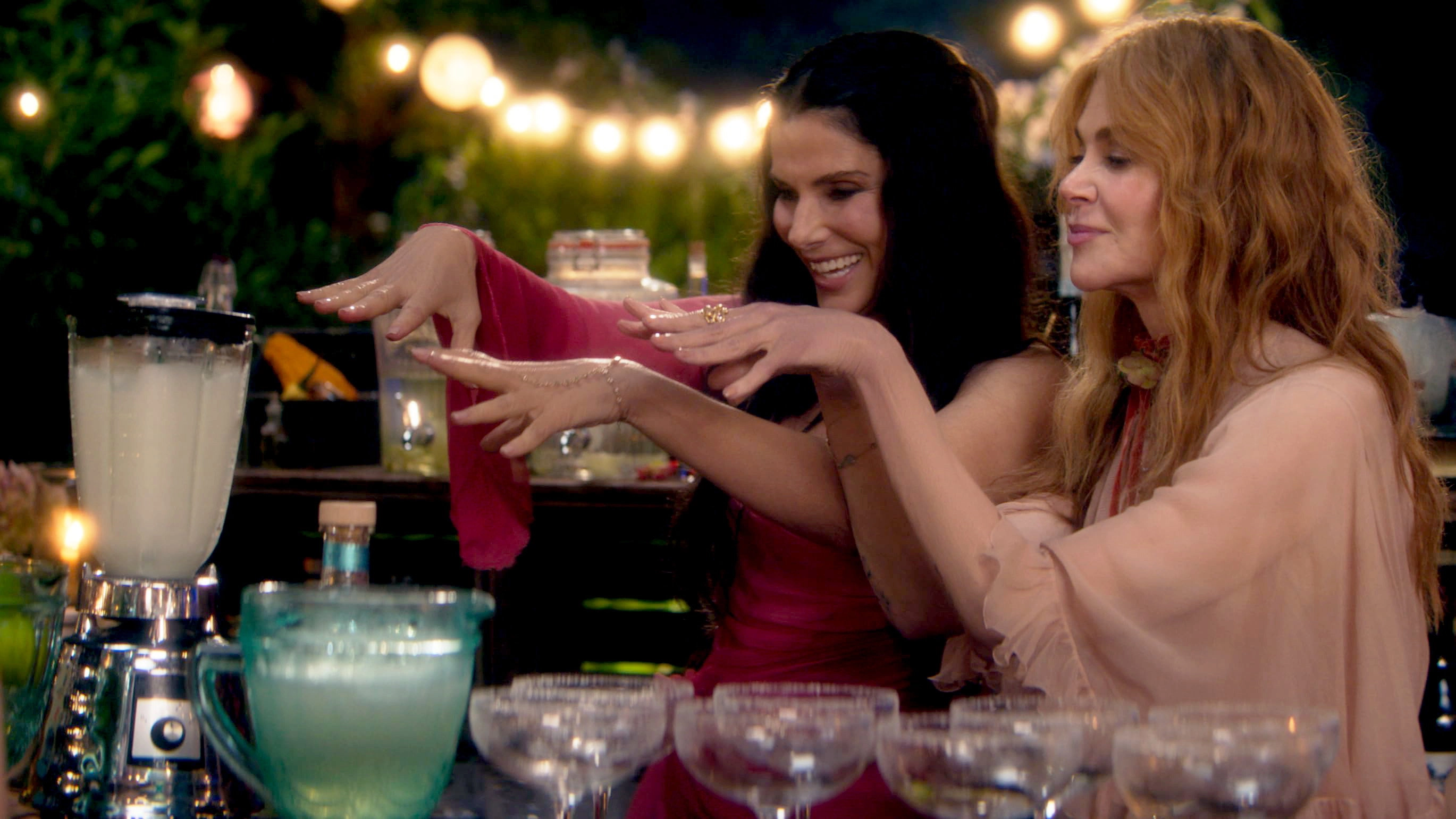
Practical Magic 2 opened No. 1 with $30 million from 4,146 theaters — a $7,235 per-screen average — plus $16 million from 77 overseas markets, for roughly $46 million worldwide. It ended Spider-Man: Brand New Day's six-weekend run at the top.
It also landed at the low end of Warner Bros.' own $30–35 million projection, against a $75 million budget, which is why the trades filed it under "disappointment" on a weekend it won.
One number for perspective: that ~$46 million worldwide opening is about what the 1998 original made domestically across its entire theatrical run.
The takeaway
The honest version of this story isn't "critics are wrong." It's this: legacy sequels get graded on whether they're good, and bought on whether they're familiar, and those are not the same test.
The critics reviewed a film and found it gray, contrived, and located in the wrong country. The audience bought a reunion with two actors they've loved since the Clinton administration and got exactly that. Both of those things are true at once. Neither group is lying, and neither one is wrong, because they were never grading the same paper.
Where the critics do have a point — and I say this as someone allergic to the "critics are out of touch" reflex — is that "it delivered what the fans wanted" is a floor, not a ceiling. The 1998 movie is beloved despite its 31% because it had a texture people wanted to live inside. If the sequel really did trade New England autumn for London concrete, then the complaint isn't snobbery. It's that the thing the audience showed up for got partially replaced, and a 92% from people who'd have shown up regardless is not the instrument that would detect it.
Ask me again in twenty-eight years, when this one's a classic too.
Scores current as of September 14, 2026. The Tomatometer has been climbing all week as reviews come in, so if you're reading this later, check it yourself.
Related title: Practical Magic 2
Comments (0)
Log in to leave a comment.